Quick Read: What You’ll Learn
- 01Solitaire: one stone, maximum focus→
- 02Halo: the diamond that looks bigger than it is→
- 03Three-stone: past, present, future→
- 04Other setting styles worth considering→
- 05Quick comparison table→
Tap any point to jump straight to that section.
Three setting styles account for roughly 80% of engagement rings sold in 2026: solitaire, halo, and three-stone. Each shapes how your center diamond reads on the hand in a completely different way. The same 1-carat round brilliant looks classic and restrained as a solitaire, glamorous and much larger as a halo, meaningful and architectural as a three-stone. None is better than the others; all are correct for different people. Here is what each style actually means, how it wears, what it costs, and how to match it to the recipient.
For shape decisions (which comes first), see our round vs oval guide, emerald cut guide, or cushion cut guide. For budget framing, see how much to spend.
The short answer
- Solitaire: one stone, clean metal band. Timeless, most popular style, reads “classic elegance.” 45% of rings sold.
- Halo: center stone ringed by smaller accent stones. Looks 30–50% larger for the same center carat. Reads “glamorous, modern.” 28% of rings sold.
- Three-stone: center stone flanked by two smaller side stones. Traditionally symbolizes past-present-future. Reads “substantial, meaningful.” 12% of rings sold.
- Match to the wearer: Solitaire for minimalists. Halo for maximalists. Three-stone for people who value symbolism and structure.
Solitaire: one stone, maximum focus
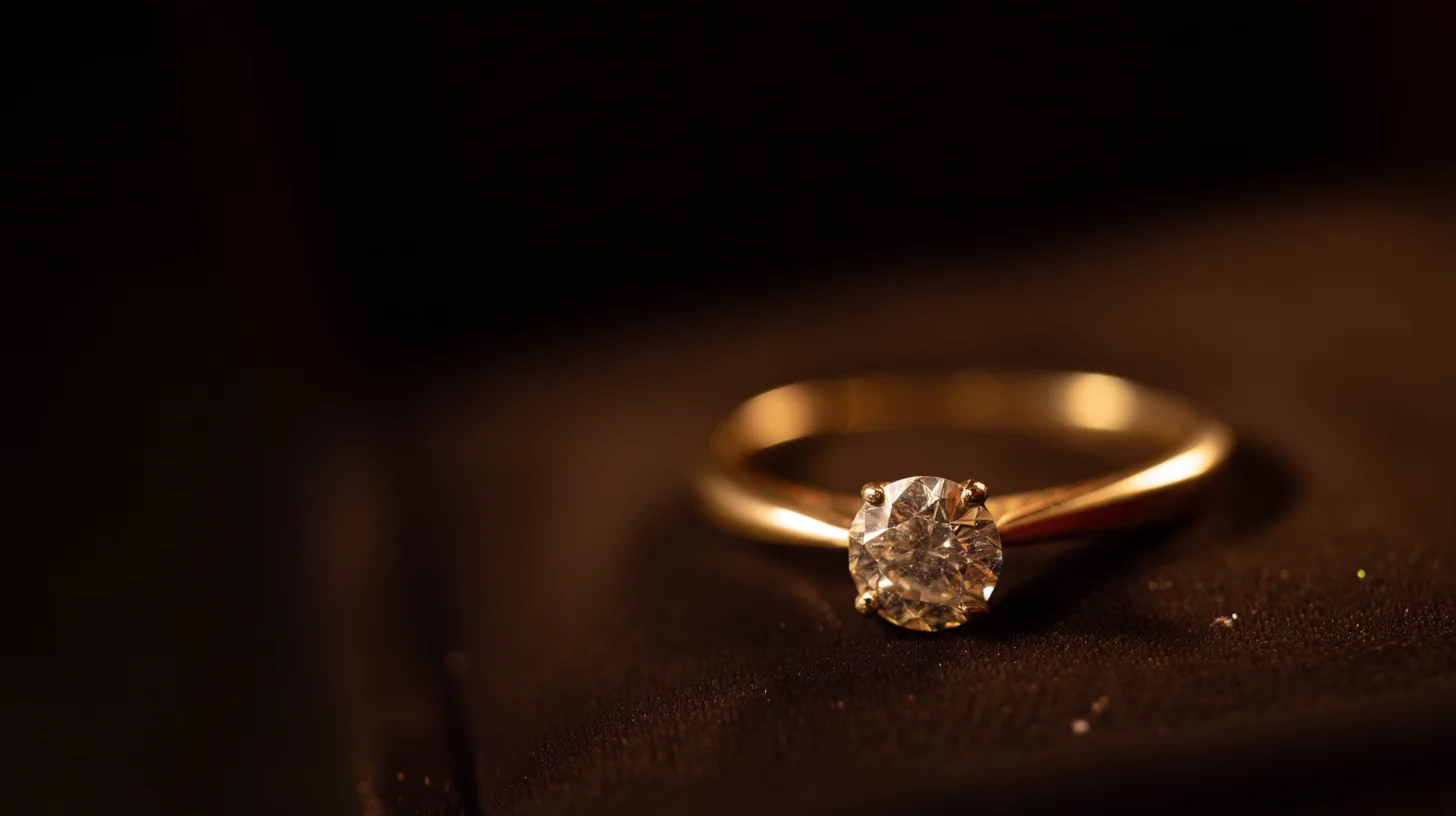
The solitaire is a single diamond held by prongs on a plain metal band. It has been the most popular engagement ring style since Tiffany & Co. introduced the six-prong Tiffany® Setting in 1886, and the design has outlasted every other jewelry trend because nothing distracts from the stone. The center diamond is everything.
How it wears
- Photographs: Clean, readable silhouette. Easy to photograph; the stone is the subject.
- On the hand: Looks its true carat size. No visual tricks. A 1ct solitaire reads as a 1ct diamond.
- With activity: Prongs need checking every 12–18 months. Classic 4-prong and 6-prong settings are both secure if well-made.
- Stacking: Solitaires stack beautifully with wedding bands. The clean band profile sits flush with almost any band style. See our wedding band matching guide.
Cost signature
Since there are no accent stones or pavé work, solitaires are the cheapest setting style per carat. Typical setting cost: $400–900 in 14K gold, $800–1,600 in platinum. All of the budget goes to the center stone, which means a solitaire at a given budget has the largest or highest-graded center of any setting style.
When to choose solitaire
- The wearer has minimalist taste, simple daily jewelry, classic style.
- You want maximum spend on the center stone.
- The wearer has an active lifestyle (fewer prongs to snag, easier to clean).
- You want a ring that photographs well regardless of light or angle.
- You expect the ring to be worn every day for 40+ years (the classic shape never dates).
Expert tip: If you choose a solitaire, spend meaningfully on the center stone’s cut grade. With no accent stones to distract, every imperfection in the main stone is visible. Always target Excellent or Very Good cut, VS1+ clarity, F–H color on a solitaire.
Halo: the diamond that looks bigger than it is
The halo is a center stone surrounded by a ring of smaller accent diamonds (the “halo”), usually pavé-set. The halo originated in Edwardian and Art Deco jewelry in the early 1900s and had a major revival in the late 2000s after Meghan Markle’s engagement ring brought three-stone designs into the spotlight and other celebrities normalized halo glamour. Today halo sits comfortably in the top 3 setting styles globally.
How it wears
- Visual size: A halo makes the center stone read 30–50% larger. A 1ct round in a halo looks closer to 1.5ct. A 1.5ct looks closer to 2ct.
- Photographs: Sparkles from every angle. Looks glamorous in both bright and low light. Extremely photogenic.
- On the hand: More visual weight and presence than a solitaire. Draws the eye.
- With activity: More prongs and setting points mean more maintenance. Pavé accents can occasionally loosen over years of wear. Annual professional inspection is wise.
- Stacking: Halos pair best with slim straight or contoured wedding bands. Some halos have outward-protruding halo edges that require a curved band to sit flush.
Cost signature
The halo adds $600–1,500 in accent diamond cost plus $400–800 in additional setting labor versus a solitaire. Total setting cost: $1,200–2,500 in 14K gold. But because the halo makes the center look larger, you can afford a smaller center stone for the same visual impact. A $3,500 halo ring with a 1ct center can look like a $6,000 solitaire with a 1.5ct center.
When to choose halo
- The wearer loves sparkle, glamour, and bold jewelry.
- You want the ring to read larger than the center stone’s actual carat.
- Budget is constrained but visual impact matters. Halo is the best “bang for the buck” in setting style.
- The wearer’s everyday jewelry is already on the statement-piece side.
- The hand is long and slim (halos add visual volume that flatters).
Key insight: The halo is the best setting for buyers with a $3,000–5,000 budget who want the ring to look “bigger than it is.” The center stone can stay at 1ct while the overall ring footprint reads closer to 1.5–1.7ct. No other setting style achieves this.
Three-stone: past, present, future
The three-stone is a center diamond flanked by two smaller side stones. Traditionally the three stones represent the couple’s past, present, and future. The style dates to 16th-century European nobility and returned to prominence in 2018 after high-profile celebrity engagement ring reveals featured the design. It reads as substantial, meaningful, and architectural.
How it wears
- Photographs: The three stones create a clear, balanced silhouette. Reads as impressive without being ornate.
- On the hand: Spreads wider than a solitaire or halo of the same center carat. Fills the space between knuckles.
- With activity: Side stones are usually 0.20–0.50ct each and well-protected in prong or bezel settings. Durability is high.
- Stacking: Works beautifully with plain or diamond-accent bands. The side stones’ shapes (pears, trillions, round) dictate which bands sit flush.
Cost signature
Side stones add $800–2,200 per stone depending on size and cut, plus $500–1,000 in additional setting labor. Total ring cost: $2,500–5,000 above the same center carat in a solitaire. This is the most expensive of the three major styles at the same center carat, because you’re essentially buying three certified stones instead of one.
Common side stone shapes
- Pear or tapered baguette (elegant, elongating). Meghan Markle’s ring uses pears. Classic and widely available.
- Trillion (triangular, modern, geometric). Strong visual contrast with round or cushion centers.
- Round (classic, symmetrical). Most traditional side stone choice.
- Oval or marquise (elongated, softer). Pairs well with round or cushion centers.
When to choose three-stone
- The symbolism (past, present, future) matters to the couple.
- The wearer has elegant, refined taste and values meaningful over trendy.
- You want the ring to feel substantial without being ornate.
- Budget is $5,000+ where the side stone cost is proportionate.
- The wearer has long, graceful fingers that suit the elongated silhouette.
Other setting styles worth considering
Pavé
A solitaire with a band covered in small accent diamonds. Adds subtle sparkle and glamour without the full halo commitment. Typical cost: $500–1,200 over a plain solitaire. Great for buyers who want more sparkle than solitaire but less drama than halo.
Hidden halo
A halo of accent diamonds placed beneath the center stone, visible only from profile. Looks like a solitaire from above but reveals sparkle when viewed from the side. Subtle, architectural, and increasingly popular in 2025–2026.
Bezel
The center stone is surrounded by a rim of metal instead of prongs. Extremely secure, very modern, and the most durable setting for active lifestyles. Slight cost reduction vs prongs because less labor. Reads as modern and sleek.
Cathedral
The metal shank rises up to meet the center stone (like a church arch), giving it height and presence. Often combined with solitaire or halo. Reads as regal and architectural. Slight premium over flat-shank solitaires.
Side-stone (non-three-stone)
Accent diamonds set into the shoulders of the band (but no official “side stones” flanking the center like a three-stone). Adds sparkle along the finger. Usually pavé or channel-set. Think of it as “halo’s cousin.”
Quick comparison table
| Style | Visual Size | Cost | Personality | Stacks With |
|---|---|---|---|---|
| Solitaire | Actual | $ | Classic, minimalist | Almost any band |
| Halo | +30–50% | $$ | Glamorous, bold | Slim or contoured |
| Three-Stone | Wider spread | $$$ | Meaningful, substantial | Plain or accent |
| Pavé Solitaire | Slightly more sparkle | $–$$ | Subtle glamour | Almost any band |
| Hidden Halo | Same (sparkle on profile) | $$ | Architectural, modern | Slim or plain |
| Bezel | Actual | $ | Sleek, secure, modern | Plain or sculpted |
How to pick for your recipient (without asking)
This is the actual decision criteria, in priority order:
- Check her jewelry now. Quiet, minimal earrings and a thin necklace? Solitaire. Bold statement earrings and layered necklaces? Halo. Elegant, curated vintage pieces? Three-stone or pavé.
- Check her Pinterest or Instagram saves. If she has saved engagement ring inspiration, the pattern is revealing. 80% of women who are seriously thinking about it have a Pinterest board.
- Ask a sister, closest friend, or mother. These three tend to know. If they say “she loves halos,” trust them.
- Default to classic. If you genuinely don’t know, pick a round brilliant solitaire in a six-prong Tiffany setting. It has been the single most popular choice for 140 years because it’s elegant on everyone. Nobody has ever regretted proposing with one.
Backup plan: If you’re genuinely uncertain about style but certain about wanting to propose, most reputable jewelers (including Diavlia) offer setting swap programs. You can propose with a classic solitaire and let her pick the final setting together. This is increasingly common and absolutely acceptable, many couples prefer it.
What about metal color?
Metal color is independent of setting style. Any of the styles above come in 14K white, 14K yellow, 14K rose, 18K white, 18K yellow, 18K rose, or platinum. For the metal comparison, see our 14K vs 18K gold guide. White metals (white gold, platinum) visually emphasize the diamond most. Yellow gold looks warm and vintage. Rose gold is softer and increasingly popular in 2026.
What Diavlia offers
Every Diavlia engagement ring can be ordered in any of these setting styles, with a lab-grown IGI-certified center stone you choose independently. You pick the stone (shape, carat, specs), you pick the setting (solitaire, halo, three-stone, hidden halo, pavé), you pick the metal. The ring is built to order and shipped in 3–5 weeks with the full IGI certificate.
Choose your center stone specs, then match it to the setting that fits your story. IGI-certified, 14-day returns, lifetime warranty.
Frequently asked questions
1. Which setting is the cheapest?
Solitaire. No accent stones, least metal, least labor. A plain 14K solitaire setting runs $400–900 for the metal portion (excluding center stone). Halo runs $1,200–2,500 for the setting; three-stone runs $2,500–5,000+ depending on side stones.
2. Does halo setting make the diamond look bigger?
Yes. Visually, a well-designed halo makes the center stone read 30–50% larger. A 1ct round in a pavé halo looks closer to 1.5ct. This is the primary reason halos became popular for buyers with $3,000–5,000 budgets.
3. Which setting is most secure for an active lifestyle?
Bezel is the most secure (metal fully surrounds the stone). Six-prong solitaire is second-most secure. Halos and pavé settings have the most maintenance needs because of the multiple accent stones. All are safe for daily wear with annual professional inspection.
4. Do three-stone rings come with matching bands?
Yes, most reputable jewelers offer matching or complementary wedding bands for three-stone engagement rings. Plain gold or platinum bands sit flush; accent-stone bands can add visual continuity.
5. Is a halo setting out of style?
No. Halos are slightly less dominant in 2025–2026 than they were in 2015–2019, but still represent 28% of engagement rings sold. They are not trendy; they are classic-glamorous, like Art Deco. Not a style that dates quickly.
6. What about a hidden halo vs a visible halo?
Both are excellent. Hidden halos look like solitaires from above but show sparkle on profile. Visible halos look dramatic from every angle. Hidden halos are slightly more subtle and increasingly popular with modern buyers. Visible halos are the traditional choice.
7. Are side stones as good quality as the center stone?
Usually they are a slight step down in clarity and color to manage cost. If a center stone is VS1-F, side stones are typically VS2-G or SI1-G. This is not visible to the eye; the center draws the focus. Reputable jewelers will list the specs of all stones, including side stones, on the product page.
8. Can I start with a solitaire and upgrade the setting later?
Yes. Most reputable jewelers (including Diavlia) will re-set a center stone into a different setting at any time. You pay for the new setting; the center stone transfers. Typical turnaround: 2–4 weeks.
Related reading
- Hidden Halo vs Halo: Which is Right for You?
- Bezel vs Prong Setting: Full Comparison
- Round Brilliant Cut Guide
Last updated: April 2026.