Quick Read: What You’ll Learn
- 01Why the round brilliant dominates→
- 02Proportions that actually matter→
- 03Size and appearance: how a round faces up→
- 04Settings that work best with round brilliants→
- 05What it costs (and why)→
Tap any point to jump straight to that section.
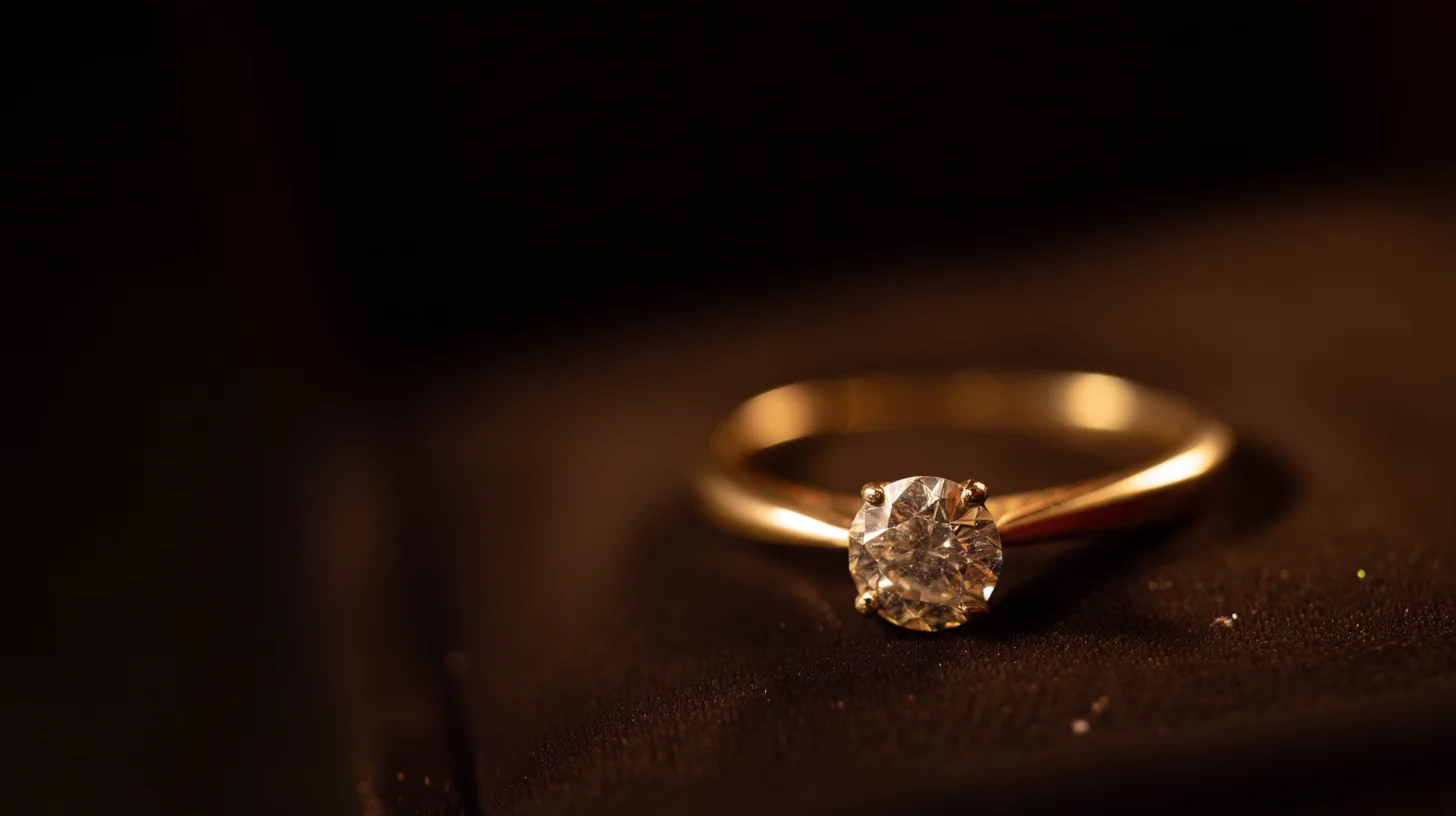
The round brilliant has been the world’s favorite engagement-ring cut for over a century, and for good reason: it is mathematically optimized to return more light than any other shape. When people say a diamond “shines,” they almost always mean the performance of a well-cut round brilliant. Understanding what separates an average round from a spectacular one is the single highest-leverage move you can make before buying.
This guide covers what the 58 facets actually do, the proportions that matter (and the ones that are marketing), how to size a round for maximum visual impact on the finger, which settings complement the shape, and where the real pricing traps are. For the shorter cut-by-cut overview, see our shape guide.
The short version
- Cut grade matters more than any other C. Excellent cut, VS1-VS2 clarity, G-H color is the sweet spot.
- Target depth 60–62.5% and table 54–57%. Stones outside this range dim noticeably.
- Round is the most expensive shape per carat, roughly 15–25% more than equivalent fancy cuts.
- A 1ct round faces up at about 6.5mm. For a bigger look without a bigger budget, see our diamond size guide.
Why the round brilliant dominates
The modern round brilliant was engineered, not found. In 1919, Marcel Tolkowsky published a mathematical analysis of diamond proportions that maximized the return of white light (brilliance) and spectral colors (fire). His model became the baseline for every round brilliant cut for the next hundred years, with minor refinements from GIA, AGS, and independent cutters.
The result is a stone with 57 or 58 facets arranged in two concentric cones, the crown (top) and the pavilion (bottom), that together act as a series of tiny mirrors. Light entering the top either bounces out as brilliance or refracts into the rainbow spectrum you see as fire. When the proportions are right, close to 97% of the light entering the stone comes back out as sparkle. When the proportions are wrong, light leaks through the bottom (“fish-eye”) or escapes the sides (“dead zones”), and the stone looks dull regardless of its clarity or color grade.
This is why cut grade matters more than any other of the 4 C’s for a round brilliant. A mid-grade Excellent-cut VS2 G-color will outshine a perfect-on-paper D-color VVS1 with a fair cut, every time. For the full priority order across the 4 C’s, see our ranked guide to the 4 C’s.
Proportions that actually matter
The IGI and GIA cut grade aggregates roughly a dozen measurements into a single Excellent / Very Good / Good / Fair / Poor score. For a round brilliant you should read past the single letter grade and verify four specific measurements on the report:
Total depth (height vs diameter)
Table percentage (top flat vs diameter)
Crown angle
Pavilion angle
Depth that exceeds 63% hides weight in the pavilion, making a 1ct stone face up like 0.90ct. Depth under 59% goes the other way: the stone spreads wider but light leaks through the bottom, causing the “fish-eye” effect visible from above.
Table is the flat top facet. A table outside 54–57% either cuts into the star facets (too wide) or restricts the window for light entry (too narrow). Both shave sparkle off the face-up performance.
Crown angle drives fire (color play), pavilion angle drives brilliance (white light). The two interact: a steeper crown paired with a shallower pavilion produces maximum spread and sparkle. The Tolkowsky combination of 34.5° crown + 40.75° pavilion remains the benchmark.
Two minutes, one spreadsheet. Pull up the report numbers for any round brilliant you are considering. If depth is 60–62.5%, table is 54–57%, and both crown/pavilion are in the tight ranges above, you are looking at genuinely sparkling stone regardless of marketing. If any measurement is outside, ask the seller to explain before paying premium prices.
Size and appearance: how a round faces up
Round brilliants have a predictable millimeter-to-carat relationship when cut to ideal proportions. Use the table below to set expectations before you spend:
- 0.50 ct → ~5.15mm face-up diameter
- 0.75 ct → ~5.85mm
- 1.00 ct → ~6.50mm
- 1.25 ct → ~6.90mm
- 1.50 ct → ~7.40mm
- 2.00 ct → ~8.10mm
- 3.00 ct → ~9.30mm
Fancy shapes like oval or pear face up 5–12% larger at the same carat weight, which is why shape choice often matters more than carat for visual impact. To visualize actual sizes on a finger, use our interactive size guide which renders each carat at life-scale.
Settings that work best with round brilliants
Rounds are the most versatile cut for setting choices. The symmetry lets them sit naturally in almost any design, from minimalist solitaires to complex halos.
Solitaire
The classic pairing. Four- or six-prong setting, nothing to distract from the stone. A well-cut round in a plain solitaire is widely considered the most timeless engagement ring there is. For the design philosophy behind this versus other layouts, see our solitaire vs halo vs three-stone comparison.
Halo
Rounds take halos better than any other shape because the surrounding diamonds mirror the center’s geometry. A halo can add 20–35% to the visual size of the center stone. Common for buyers who want a 1.5ct look on a 1ct budget.
Three-stone
A round center with smaller round, pear, or trapezoid side stones. The trinity symbolism (past, present, future) pairs naturally with the shape.
Pavé band
Small round diamonds embedded across the band, adding continuous sparkle. Works with any center shape but especially with rounds, as the band diamonds echo the center geometry.
What it costs (and why)
Round brilliants command roughly a 15–25% price premium over equivalent fancy shapes (oval, cushion, emerald). Two reasons: demand (they are the most-searched shape), and cutting yield (a round brilliant retains only about 40% of the rough stone; fancy shapes retain 55–60%).
A 1.00ct Excellent-cut VS1 G-color round brilliant in our collection is approximately $1,900 in 14K solid gold. The same spec in an oval cut comes in around $1,500, and in emerald around $1,400. For a full comparison of equivalent specs across major retailers, see our compare retailers page.
Lab-grown shifts the math. Lab-grown round brilliants are 40–70% less expensive than mined equivalents at the same IGI grade. This is why most buyers in the $2K–$8K range now choose lab-grown, same optics, same certification, very different price. See lab-grown vs natural for the full comparison.
Five mistakes to avoid
- Paying for D-color or IF-clarity. Beyond G-color and VS1-clarity, you are paying for grades that a trained jeweler can barely see with a loupe. The sparkle is identical.
- Skipping the cut grade. A Very Good cut for $1,800 is a better buy than an Excellent cut for $2,100 only if the Very Good stone measures within the ranges above. Verify.
- Ignoring fluorescence. Faint or Medium blue fluorescence is harmless and often invisible. Strong or Very Strong fluorescence can cause a milky appearance under direct sunlight for about 3% of stones. Verify before paying.
- Buying on percentage off. A diamond with a “70% off” retail price was likely priced 300% above wholesale to start. Compare absolute prices across direct-to-consumer sellers, not sale percentages.
- Not verifying the report online. Every GIA, IGI, and GCAL report has a number that can be verified at the lab’s website in 30 seconds. Do it before paying. For the step-by-step process, see our IGI certification guide.
Frequently asked questions
Is round brilliant out of style?
No. Round brilliant is the most-requested shape every year since 1919. It is the definition of timeless. Shape trends come and go (oval peaked 2022, emerald rising 2024–2026), but round holds the permanent top position.
What is the best carat weight for a round brilliant engagement ring?
1.0–1.5ct is the statistically most-bought range. Visually, a 1.25ct round on an average-sized finger is the “noticeable without being ostentatious” sweet spot. See our 1 carat pricing guide and engagement ring budget for the full pricing picture.
What clarity grade is invisible to the naked eye?
VS2 is “eye clean” in over 95% of round brilliants. VS1 is effectively always eye clean. SI1 is eye clean about 70% of the time in rounds (more than in emeralds), so SI1 is a viable grade to save money on, but only if you review the actual stone or a clarity-plotted report first.
Does a round look bigger than an oval?
No. At the same carat weight, an oval faces up approximately 10% larger than a round because ovals retain more surface area for less weight. This is why oval has grown as the “budget-visible” alternative. See round vs oval for the direct comparison.
What is the cheapest way to buy a round brilliant?
Lab-grown, IGI-certified, in 14K gold, direct-to-consumer. A 1ct Excellent-cut VS1 G-color lab-grown round in 14K gold is available for roughly $1,700–$2,200. The same stone mined from GIA-certified sources runs $5,500–7,500. See best engagement rings under $3,000 for curated picks.
Is it OK to buy a round brilliant online?
Yes, if the stone is IGI or GIA certified, the report is verifiable at the lab’s website, and the seller offers a full-refund return policy and insured shipping. For the detailed online-vs-in-person analysis, see buying an engagement ring online.
Ready to shop certified round brilliants?
Every Diavlia engagement ring is IGI-graded, cut to Excellent or Very Good, set in solid 14K or 18K gold, and backed by our Lifetime Upgrade Program. 40–70% less than equivalent mined stones.
Related reading
- The 4 C’s of Diamonds Ranked: Which Matters Most
- Round vs Oval Engagement Ring
- Solitaire vs Halo vs Three-Stone
- How Much is a 1 Carat Diamond
Last updated: April 2026.