Quick Read: What You’ll Learn
- 01What a 1 carat diamond actually looks like→
- 02The best 1ct spec by budget→
- 03Shape choice at 1 carat→
- 04Metal and setting at 1 carat→
- 05Why lab-grown dominates at 1 carat→
Tap any point to jump straight to that section.
One carat is the benchmark engagement ring size. It is the most-bought carat weight globally, the default answer when someone describes a ring, and the size against which every other decision is measured. The choice at 1ct is less about whether to go up or down in weight and more about how to spend the budget: cut quality, shape, color grade, metal, setting.
This guide covers what a 1ct diamond actually looks like, the three spec combinations that deliver the best visual impact at different budgets, why lab-grown has become the obvious choice at this size, and the setting decisions that change what a 1ct feels like on the finger. For the pricing deep-dive, see our how much is a 1 carat diamond guide.
The short version
- Best 1ct value spec: Excellent-cut, VS2-clarity, G-color, lab-grown, IGI certified. About $1,700–2,100 in 14K gold.
- Budget 1ct spec: Very Good-cut, SI1-clarity, H-color, lab-grown, IGI certified. About $1,100–1,500.
- Premium 1ct spec: Excellent-cut, VVS2-clarity, F-color, lab-grown, IGI certified. About $2,400–3,000.
- A 1ct round faces up at 6.5mm. An oval or pear at 1ct looks slightly larger (7.0–7.5mm long).
What a 1 carat diamond actually looks like
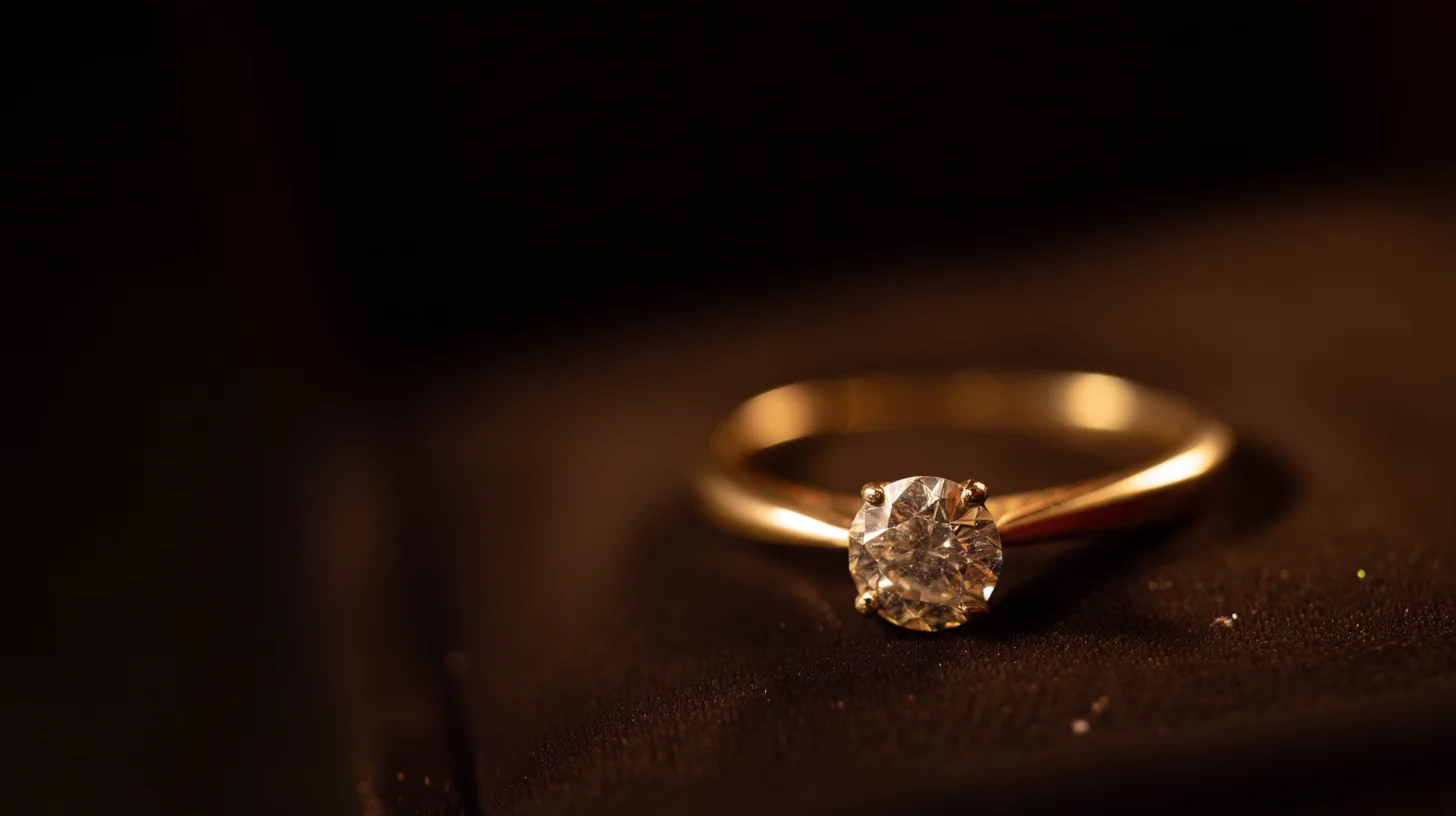
A 1 carat round brilliant measures approximately 6.5mm across (roughly the width of a US 1/4 of a pencil eraser). It looks substantial without being conspicuous. On most average to slender fingers, it reads as “noticeable but tasteful.” On larger hands or fingers, a 1ct can look understated, which is why many buyers at those sizes move to 1.25–1.5ct.
Fancy shapes at 1ct appear slightly larger than round because the weight is distributed differently. A 1ct oval looks about 10% larger face-up. A 1ct pear looks about 12% larger. A 1ct marquise looks about 30% longer (and correspondingly narrower). See our interactive size guide to visualize the difference at physical scale.
The best 1ct spec by budget
Budget tier ($1,100–1,500): Very Good cut, SI1, H color
The sweet spot for buyers who want a 1ct at the lowest honest price point. SI1 clarity is eye-clean in 70% of well-cut stones and indistinguishable from VS2 without a loupe. H color is still in the “near-colorless” range, which reads white next to anything but a true D-F comparison stone. Very Good cut sacrifices about 10–15% light return versus Excellent, but for most viewers the difference is invisible in normal light.
This tier works best in round or oval shapes. At SI1, fancy shapes with fewer internal facets (emerald, Asscher) can show inclusions more easily; stick to brilliant cuts.
Value tier ($1,700–2,100): Excellent cut, VS2, G color
The most-bought 1ct spec in 2024–2026. Excellent cut maximizes sparkle regardless of other grades. VS2 is eye-clean in over 95% of stones and is a clear step up from SI1. G color is the last grade in the “colorless” range and visually identical to F without direct side-by-side comparison.
This tier works in any shape. For round or princess, it delivers maximum sparkle. For elongating shapes (oval, pear, marquise), the Excellent cut minimizes bow-tie. For step cuts (emerald, Asscher), the VS2 clarity provides the clean look the cut style demands.
Premium tier ($2,400–3,000): Excellent cut, VVS2, F color
Key Insight: Near-top specs without paying for grades that only a trained jeweler can distinguish. VVS2 is internally flawless to the naked eye and shows only microscopic inclusions under 10x magnification. F color is indistinguishable from D or E to nearly all viewers in any normal setting.
Key Insight: This tier is for buyers who want reassurance that they bought at the top of the usable quality range. Diminishing returns above VVS2 and F are real; D-color Flawless stones cost 40–60% more and look identical face-up.
Shape choice at 1 carat
All major shapes work well at 1 carat. The choice usually comes down to aesthetics, but some shapes deliver more visual impact per dollar:
- Round brilliant: Most sparkle, most expensive per carat. Safe forever-choice. See round brilliant guide.
- Oval: 10% bigger face-up, 20% cheaper than round. Most popular non-round choice. See round vs oval.
- Princess: Modern geometry, 15–25% cheaper than round, sharp corners need V-prongs. See princess cut guide.
- Cushion: Romantic, soft edges, vintage-inspired. 15% cheaper than round. See cushion cut guide.
- Emerald: Art-deco geometry, step cut shows less sparkle but more “hall-of-mirrors” effect. Needs VS2+ clarity. See emerald cut guide.
- Pear: Distinctive teardrop, elongates finger, requires V-prong on point. See pear cut guide.
Metal and setting at 1 carat
Metal
14K solid gold is the standard for 1ct settings. It delivers the right weight and durability at a fair price, and comes in white (with rhodium plating), yellow, or rose. 18K is 75% pure gold (vs 58% for 14K), which gives a richer color but is slightly softer. Platinum is the most durable but costs roughly 40% more for the same design.
For white metal looks, 14K white gold and platinum are visually identical when the 14K is freshly rhodium-plated. Rhodium wears off over 1–3 years and needs re-plating (free at most jewelers, $75–150 elsewhere). Platinum does not need this maintenance.
Setting type
- Solitaire: Single 1ct stone, clean band. Timeless. Most versatile.
- Halo: 1ct center plus a ring of small accent diamonds. Adds 20–35% visual size. Reads as 1.3–1.4ct for the same center stone.
- Three-stone: 1ct center with smaller side stones (typically 0.25–0.50ct each). The side stones are often different shapes (pear or trapezoid) to create contrast.
- Hidden halo: A tiny ring of diamonds underneath the main stone, visible only from the side. Adds subtle sparkle without altering the face-up appearance. Popular in 2024–2026.
- Pavé band: Small diamonds across the band. Adds continuous sparkle. Can make any center stone appear larger by contrast.
A 1ct solitaire reads as “simple elegance.” A 1ct halo reads as “glamorous.” A 1ct three-stone reads as “intentional design.” For the deep comparison, see our solitaire vs halo vs three-stone guide.
Why lab-grown dominates at 1 carat
At 1 carat, the economics of lab-grown are overwhelming. A 1ct Excellent-cut VS1 G-color lab-grown IGI-certified round costs $1,700–2,200 in 14K gold. The same stone mined (GIA-certified) costs $5,500–7,500. The optical performance is identical; the certificate is from different labs but uses the same 4 C’s scale.
For most buyers in 2024–2026, the choice at 1 carat is now lab-grown 1.5ct or lab-grown 2.0ct instead of mined 1.0ct. The same $5,500 that buys a mined 1ct also buys a lab-grown 2ct. See lab-grown vs natural diamonds for the full analysis.
The objection “but lab-grown has no resale value” is mostly misleading, see our lab-grown resale value breakdown. For the 90% of buyers who keep the ring for life, resale is irrelevant.
Common mistakes at 1 carat
- Paying for D-color or Flawless clarity. Invisible upgrade beyond G-color and VS1. Wasting 20–40% on premium grades for no visual return.
- Skipping cut grade for carat. A 1ct Fair-cut diamond looks smaller and duller than a 0.90ct Excellent-cut. Cut first, carat second.
- Rhodium-plated white gold without knowing. 14K white gold needs re-plating every 1–3 years. Fine if you know; surprising if you do not. Ask the seller.
- Buying SI1 or SI2 sight-unseen. Clarity at SI grades varies stone-to-stone. Always inspect or request a clarity-plotted report at this level.
- Overlooking the 0.90–0.95ct tier. A 0.95ct stone looks identical to a 1.00ct but costs 15–20% less because the “1.00ct” price break is a psychological cliff.
The 0.90–0.95ct trick: For the lowest honest price on a “nearly 1ct” ring, look at stones in the 0.92–0.96ct range. They face up at approximately 6.4mm (a 1ct faces up at 6.5mm, invisibly different) and price at 80–85% of a 1.00ct. About $300–500 of savings with zero visual tradeoff.
What to spend on a 1 carat ring
Typical 2026 spending at 1 carat:
- Budget tier: $1,100–1,500 (lab-grown, SI1, H color, 14K gold, solitaire)
- Sweet spot: $1,700–2,500 (lab-grown, VS2, G color, 14K gold, any setting)
- Premium: $2,800–4,000 (lab-grown, VVS2, F color, 18K gold or platinum, halo or three-stone)
- Mined equivalent: $5,500–10,000+ for comparable specs
For budget context, see our engagement ring budget guide. The “three months’ salary” rule was a 1930s De Beers ad; actual modern spending varies widely based on relationship context, not income.
Ready to shop 1 carat engagement rings?
Every Diavlia 1ct diamond is IGI-graded, cut to Excellent or Very Good, set in solid 14K or 18K gold, and automatically enrolled in the Lifetime Upgrade Program. 40–70% less than equivalent mined stones.
Frequently asked questions
Is 1 carat too small for an engagement ring?
Expert Tip: No. 1 carat is the most-bought size globally and is considered the baseline for a proper engagement ring. Average US engagement ring weight in 2025 was 1.1–1.3ct. Anything 1ct or above is within normal range.
What is the cheapest 1 carat diamond that looks good?
A 1ct Very Good-cut SI1 H-color lab-grown IGI-certified round in 14K gold, approximately $1,200. Anything cheaper usually means thin setting, poor cut quality, or no certification, which lowers the resale, appearance, and trust.
Do people care if my 1 carat is lab-grown?
Most do not notice or care. The stone is physically and optically identical to mined. The IGI certificate states origin, but few recipients read certificates. For deeper discussion, see can anyone tell if your diamond is lab-grown.
How much should I spend on a 1 carat ring?
Whatever is comfortable within your budget. The “three months salary” rule is a marketing invention. Average actual spend in the US is $5,500–10,000 for mined, or $1,700–3,500 for lab-grown at 1ct. See how much to spend.
Should I size up to 1.25 or 1.5 carat?
Only if the budget allows and the recipient prefers larger stones. The visual difference between 1.0ct and 1.25ct is subtle (6.5mm vs 6.9mm round diameter). The difference between 1.0ct and 1.5ct (7.4mm) is more noticeable. For most buyers, 1.0–1.25ct is the balanced choice.
Is round or oval better at 1 carat?
Oval faces up 10% larger. Round has more sparkle. Neither is objectively better, it is a taste decision. If the recipient has expressed no preference, round is the safer long-term choice; oval is the “bigger look for the same money” choice. See round vs oval.
Related reading
- How Much is a 1 Carat Diamond?
- The 4 C’s of Diamonds Ranked
- Round Brilliant Cut Guide
- How Much to Spend on an Engagement Ring
Last updated: April 2026.