Quick Read: What You’ll Learn
- 01What an engagement ring actually is→
- 02What a wedding ring is→
- 03How the two are worn together→
- 04Direct comparison→
- 05Do men wear both rings?→
Tap any point to jump straight to that section.
It’s one of the most searched questions before anyone ever walks into a jewelry store: what’s actually the difference between an engagement ring and a wedding ring? The two get worn together on the same finger for decades, they’re bought at different moments, and they answer different cultural questions. Here is the honest, no-jargon explanation.
For deeper dives, see our engagement ring budget guide and wedding band matching guide.
The short answer
- Engagement ring: proposed with. Has a center diamond. Worn from proposal onward. Average US spend in 2025: $5,500.
- Wedding ring (band): exchanged at the ceremony. Usually a plain or diamond-accent band. Worn daily after. Average US spend: $1,200 per ring.
- Both worn together on the fourth finger of the left hand. Wedding band sits closer to the heart (on the hand side), engagement ring goes on top.
- Different budgets, different roles. The engagement ring is the statement piece. The wedding band is the commitment ring.
What an engagement ring actually is
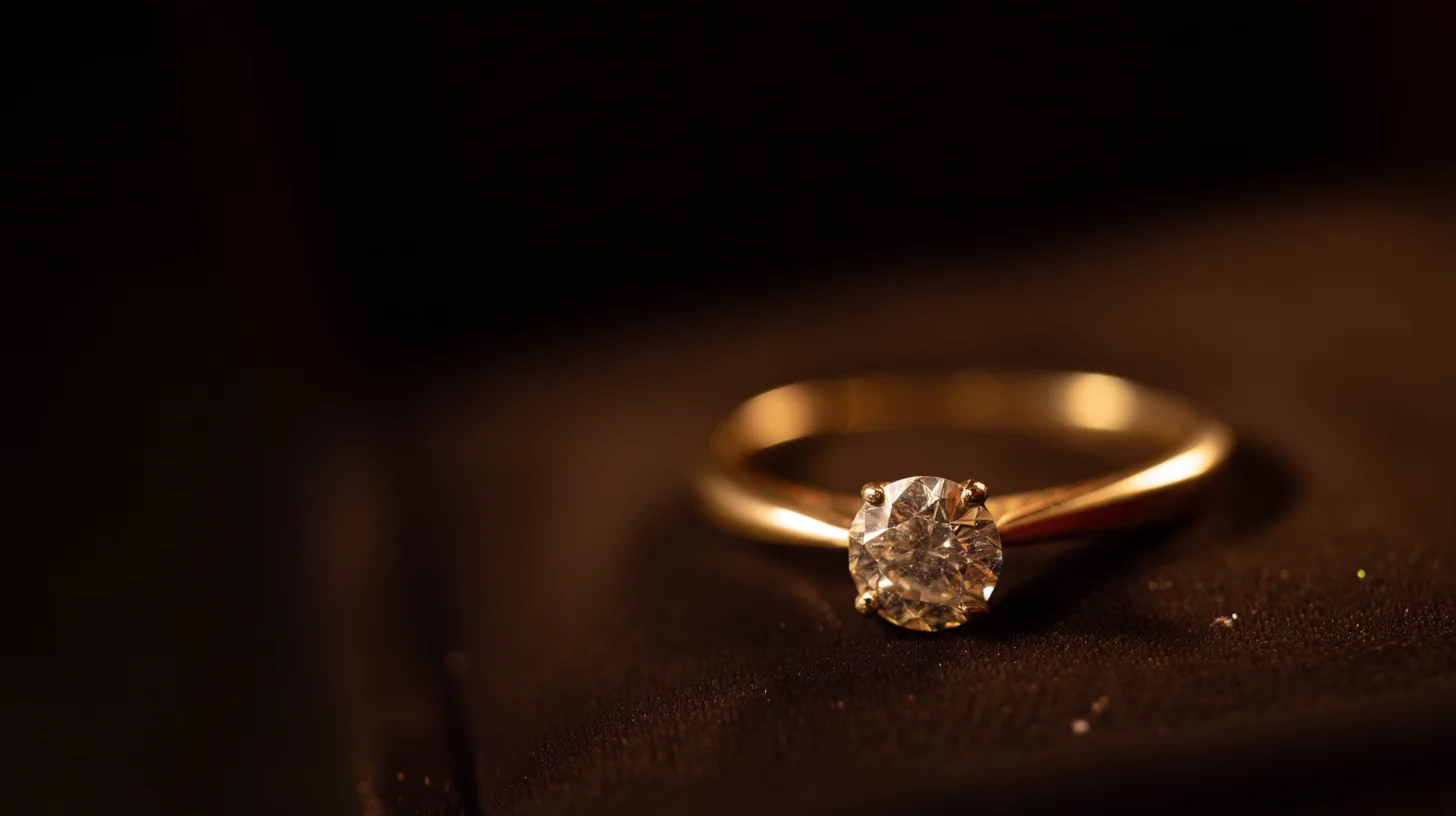
An engagement ring is given by one partner to another at the proposal. It signifies intent to marry and starts being worn immediately after the "yes." It traditionally features a prominent center diamond or other gemstone, set in gold or platinum, designed to be noticed.
In 2025, 80% of US engagement rings featured a diamond center stone, 13% a colored gemstone (sapphire, emerald, moissanite), and 7% were unique designs with multiple stones or no center. See our 2026 trends guide for the current shape and setting landscape.
The engagement ring is the memory piece of the relationship. It’s photographed, shown to family, posted on social media, and re-photographed 50 years later at anniversary milestones. Its design carries significant weight in the couple’s story.
What a wedding ring is
The wedding ring (also called a wedding band) is exchanged between both partners during the ceremony itself. Both partners typically wear wedding bands, even if only one partner wears an engagement ring. The design is usually simpler, a plain gold or platinum band, an eternity band with accent diamonds, or a matching metal to the engagement ring.
The wedding ring’s role is to represent the daily commitment of marriage, not the momentous engagement announcement. It’s designed to be worn every day for 40-plus years without getting in the way. It should sit flush against the engagement ring if worn together.
How the two are worn together
Traditionally, the wedding band is placed on the finger first at the ceremony, and the engagement ring sits on top. The explanation (cultural, not practical): the wedding band is closest to the heart.
After the ceremony, most women wear both rings on the same finger (fourth finger, left hand in most Western cultures). Some women wear the engagement ring on the right hand during the ceremony and move it back to the left after the band is exchanged. Others simply pass the engagement ring to their maid of honor before the ceremony.
Practical tip: For comfortable stacking, ensure the wedding band sits flush with the engagement ring’s design. Some engagement rings have contoured or notched designs specifically to match a straight band; others need a curved or U-shaped band to tuck under the center stone. See our wedding band matching guide for compatibility by setting style.
Direct comparison
| Aspect | Engagement Ring | Wedding Ring / Band |
|---|---|---|
| Given when | At the proposal | At the ceremony |
| Center stone | Usually yes | Usually no, or small accents |
| Average US spend 2025 | $5,500 | $1,200 (per ring) |
| Who wears it | Typically one partner | Both partners |
| Design prominence | Statement | Subtle, daily-wear |
| Finger worn on | 4th finger left hand | 4th finger left hand (with engagement) |
| Resizing frequency | Rarely, kept as original | Possibly after pregnancy, weight changes |
Do men wear both rings?
Men typically wear a wedding ring only, not an engagement ring. About 5-7% of US couples in 2025 opt for a men’s engagement ring (sometimes called a "management ring"), usually a simple diamond-accent band worn from engagement through the ceremony, then replaced by the wedding band. Most male wedding bands are plain gold, tungsten, or titanium; increasingly 14K or 18K gold with brushed or polished finishes.
Note: Diavlia’s catalog focuses on female-recipient fine jewelry. For men’s jewelry, reputable competitors like Blue Nile and Brilliant Earth have larger men’s selections.
Budget planning for both
The common framework is: allocate 70-80% of the combined budget to the engagement ring, 20-30% to both wedding bands combined. Example $6,000 combined budget:
- $4,500 engagement ring (1.25ct VS1-F lab-grown round in 14K gold)
- $900 her wedding band (matching 14K gold or with accent diamonds)
- $600 his wedding band (plain 14K gold)
These proportions vary widely by couple. Some spend equally on both. Some skip the wedding band entirely. Some buy matching engagement-and-band sets upfront (bridal sets), which can save 15-20% vs buying separately.
Key insight: The "engagement ring bigger than wedding ring" tradition isn’t universal. In many European countries (especially Scandinavian and German), both rings are plain bands and the wedding ring gets the diamond accent. In Latin American and South Asian cultures, ring traditions vary considerably. No approach is more "correct."
Can one ring do both jobs?
Yes. This is increasingly common. A single ring worn from engagement through marriage is sometimes called an "engagement band" or "eternity band." Designs that work well for both:
- Full eternity band with diamonds all the way around, worn throughout.
- Half-eternity band with diamonds on the top half only, no resize concerns.
- Pave solitaire that reads substantial enough to stand on its own without a second ring.
Advantages: simpler, often lower total cost, one meaningful piece rather than two. Disadvantages: less flexibility, and the ceremony exchange tradition is a meaningful moment many couples want to keep.
When to buy each ring
- Engagement ring: Purchased and selected (often secretly) in the weeks or months before the proposal. Every Diavlia ring is in stock and arrives in 2–5 business days from order. Plan one week of buffer before the proposal for comfort.
- Wedding bands: Purchased together as a couple typically 2-6 months before the ceremony. Both partners try on multiple styles, pick together.
IGI-certified lab-grown diamonds in solid gold and platinum. 14-day returns, lifetime warranty, automatic Lifetime Upgrade Program enrollment.
Frequently asked questions
1. Can the engagement ring and wedding band be the same ring?
Yes, many couples use a single ring for both roles. This is especially common with full or half-eternity bands, solitaire pavé rings, or simpler band designs. Some couples skip the wedding band entirely and wear only the engagement ring throughout their marriage.
2. Do wedding rings always match between partners?
Not required. Many couples match metal color (both 14K white gold, both platinum) but differ in width, style, and accent stones. Matching gives visual unity; different styles express individual personality. Both are common.
3. Who pays for the engagement ring vs wedding ring?
Traditionally, the proposing partner pays for the engagement ring. Both partners typically contribute to wedding bands. This is increasingly flexible, many modern couples split all ring costs or prioritize financial transparency from the start.
4. What finger does the engagement ring go on?
Fourth finger of the left hand in most Western cultures. The tradition traces to ancient Roman and Egyptian beliefs about a "vena amoris" (vein of love) connecting that finger to the heart. In Russia, Germany, Norway, Denmark, and some Eastern European countries, rings are worn on the right hand.
5. Can the wedding ring be worn alone without an engagement ring?
Absolutely. Many couples prefer the simpler look of a wedding band alone. Eternity bands, diamond-accent bands, and beautifully crafted plain bands all make strong standalone statements.
6. Is it weird to propose with just a wedding band?
Not at all, especially if you’re planning to have your partner pick the engagement ring together afterward. Proposing with a plain band and then designing the engagement ring together is increasingly common, particularly among partners who want to co-create the engagement experience.
7. How much should each ring cost relative to the other?
Common ratios range from 3:1 (engagement 75%, band 25%) to 5:1 (engagement 83%, band 17%). Above 5:1 the band can feel dwarfed; below 3:1 and the engagement ring stops being the statement piece. Match to the wearer’s taste.
8. When should I buy each ring?
Engagement ring: 2-6 weeks before the proposal (longer if custom). Wedding bands: 2-6 months before the wedding, typically after invitations go out. Order early enough that sizing and any engraving are done without stress.
Last updated: April 2026.