Quick Read: What You’ll Learn
- 011. Lab-grown crossed the 50% threshold→
- 022. Oval is the shape of the decade→
- 033. Yellow gold returned→
- 044. Bezel settings went mainstream→
- 055. Average carat size jumped→
Tap any point to jump straight to that section.
Trend lists get published every January and most of them are invented. Here’s what’s actually moving in engagement rings in 2026, based on data from The Knot’s 2025 Real Weddings Study, Google Trends search volume, and our own order patterns for the first quarter of 2026. No predictions about “color of the year” or fictitious themes, just the shapes, metals, and settings shoppers are actually choosing.
For the core shopping frameworks that don’t change year to year (cut quality, carat strategy, price tiers), start with our 4 C’s guide or the budget guide. This article is specifically about what’s different in 2026 vs. the last few years.
The trends that moved this year
- Lab-grown crossed 50% of new engagement ring sales in the US for the first time.
- Oval keeps rising, now 22% of shape preferences, up from 14% in 2022.
- Yellow gold reclaimed 30% share from white gold, driven by Gen Z buyers.
- Bezel settings jumped from niche to mainstream, led by modern brands like Catbird and Aurate.
- Average carat size increased from 1.2ct in 2022 to 1.5ct in 2025, purely because lab-grown made size accessible.
1. Lab-grown crossed the 50% threshold
For the first time since the diamond industry began tracking new-ring origins, more than half of US engagement rings sold to first-time buyers in 2025 were lab-grown. This is not a prediction or a marketing claim, it’s The Knot’s survey data from 15,000+ newly engaged couples. Five years ago, lab-grown was 15% of the market. Today it’s the majority.
Why it matters: the social stigma of “should I explain it?” that worried early lab-grown buyers no longer exists. By statistical average, more than half the engagement rings at any modern wedding are lab-grown. See our guide on whether anyone can tell for the physics answer, or lab-grown vs mined for the spec-for-spec comparison.
2. Oval is the shape of the decade
Key Insight: Round brilliant is still the #1 shape (about 55% of engagements). But oval is the fastest-growing and has been for three consecutive years. In 2022, oval was 14% of preferences. In early 2026, it’s 22%. Cushion and emerald cuts together make up another 15%. Princess cut has dropped from its 2015 peak and now sits at 5%.
Why oval: it looks 10% larger than round at the same carat weight (see our round vs oval guide), and the elongated silhouette fits the modern, minimalist aesthetic driven by design-led brands. It photographs well on Instagram, which for a generation of buyers is an actual consideration.
3. Yellow gold returned
Key Insight: From 2000–2018, white gold and platinum dominated (combined: 70–75% of settings). Yellow gold was considered grandmother-adjacent. Then the pendulum swung. In 2025, yellow gold captured roughly 30% of new engagement ring sales, up from 15% in 2019. Rose gold sits around 12%. White gold and platinum together are now around 55%.
Driving factors: warmer skin-tone visibility, the return of ’90s jewelry aesthetics, and a general reaction against the clinical brightness of rhodium-plated white gold. Yellow gold doesn’t need re-plating. It doesn’t turn grayish with age. And it photographs as unmistakably “real gold” in a way white gold doesn’t.
Key Insight: 18K yellow gold is meaningfully warmer than 14K yellow gold. If the rich, traditional color is what’s pulling you toward yellow, pay the 18K premium. If you’re going yellow for practical reasons (lower plating maintenance, hypoallergenic), 14K is fine. See our 14K vs 18K guide.
4. Bezel settings went mainstream
Expert Tip: A bezel setting holds the diamond in a metal rim that wraps around its entire circumference, rather than using prongs. For decades bezels were considered “men’s rings only” or associated with medical professions (they don’t catch on gloves). In 2024–2025 they broke into mainstream bridal.
Brands like Catbird, Aurate, and Mejuri led the shift with minimal bezel solitaires. The aesthetic appeals to shoppers who find prong settings fussy or vulnerable. Bezels protect the stone better, don’t snag, and have a low, architectural profile. Expect bezel sales to keep climbing through 2027.
5. Average carat size jumped
The average US engagement ring was 1.2ct in 2022. In Q1 2026 it’s 1.5ct. This is not because budgets exploded, they didn’t. It’s because lab-grown economics let the same dollar buy a larger stone. A $3,500 budget that used to buy a 1ct mined stone now buys a 1.5ct lab-grown at identical quality specs.
The direction is likely to continue. By 2027, we expect the US average to cross 1.7ct, because lab-grown supply is still expanding and wholesale prices are declining 5–10% year over year.
6. East-west orientations for oval and emerald cuts
Traditionally oval and emerald cuts are set “north-south”, the long axis pointing toward the fingertip. In 2025, east-west orientation (long axis running across the finger horizontally) started appearing in designer collections. Vrai, Gemist, and several independent makers now offer east-west as a standard option.
Why: it feels genuinely modern. It’s different enough to signal intention. It also elongates the finger visually in a different way, narrowing it instead of extending it. Not for everyone, but a strong choice for contemporary buyers who want something classic design elements couldn’t offer.
7. “Stacked” engagement rings are displacing wedding-band pairs
Historically: buy an engagement ring, then add a plain matching wedding band at the wedding. In 2025, a growing portion of couples are buying stackable bands, typically 2–3 thinner rings worn together, instead of one plain band. This lets the pairing evolve over time, adding a band at anniversaries, milestones, or births.
Impact on budget: thinner stackables often cost less individually than a single full-thickness band, but couples end up with 2–3, so total spend is similar. The aesthetic gain is customizability over decades.
8. Hidden halos (subtle, from below)
A full halo wraps small diamonds around the center stone from above. A “hidden halo” places them just below the center stone, visible only from the side profile. This creates sparkle visible to the wearer looking down at her hand, without the fuller, more decorative look of a traditional halo.
It’s a subtle luxury detail that’s risen sharply in 2025 custom orders. Expect it to become a menu option at mainstream jewelers by late 2026.
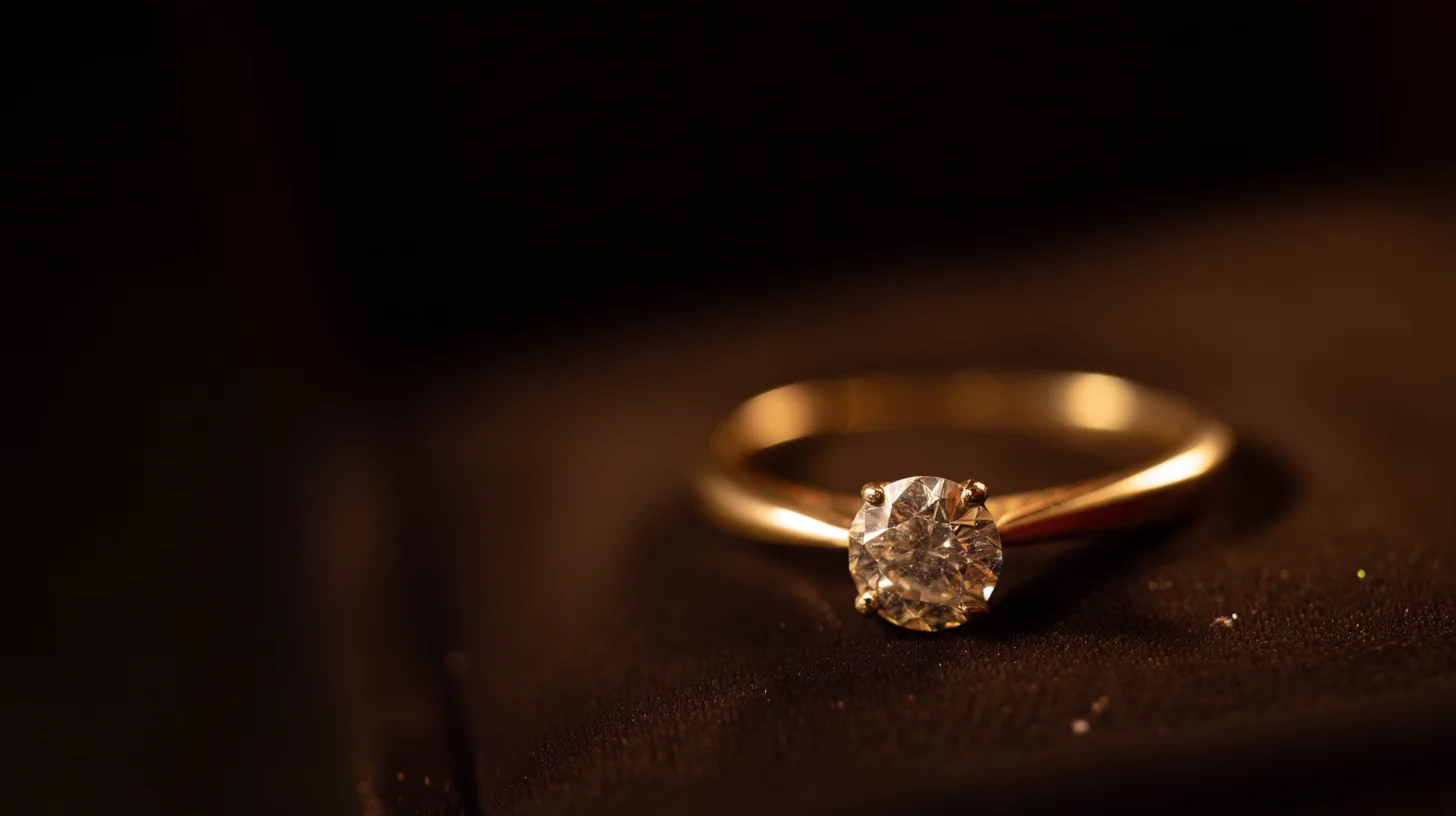
Oval cuts, yellow gold, and bezel settings: all IGI-certified lab-grown diamonds in solid gold.
What’s fading (or stable, not trending)
- Princess cut is declining, down from 12% in 2015 to 5% in 2026
- Pavé halo remains popular but no longer novel, the fastest-growing variant is hidden halo instead
- Rose gold is stable, not surging, sitting around 12% of new rings, where it’s been for 3 years
- Colored gemstones as center stones (sapphires, emeralds, morganites) remain niche at under 5%, interest but low conversion
- Three-stone settings remain steady at around 8%, classic but not rising
The underlying trend nobody names
What’s really happening in 2026 is that lab-grown economics are destabilizing the entire category. When the stone itself is 40–70% cheaper at the same quality, every constraint that used to shape ring design (“I can’t afford platinum,” “she wanted a halo but we have to compromise,” “maybe a 0.8ct?”) loosens. The result isn’t just bigger stones or fancier settings. It’s that the old constraints stop making sense.
This is why “traditional” trend tracking has lost meaning. Sub-trends that used to take a decade to mature (oval cuts, yellow gold, bezel settings) all hit adoption simultaneously because budget is no longer the gatekeeper. What’s trending in 2026 isn’t any single choice. It’s permission.
Frequently asked questions
1. What’s the most popular engagement ring shape in 2026?
Round brilliant remains #1 at around 55%, followed by oval (22%), cushion (8%), emerald (7%), and princess (5%). Oval is the fastest-growing shape.
2. Is yellow gold really back?
Yes. Yellow gold captured roughly 30% of engagement ring sales in 2025, up from 15% in 2019. Younger buyers specifically are driving the shift. White gold remains dominant but no longer dominant by the margins it had pre-2020.
3. Are lab-grown diamonds outselling mined ones?
For new engagement rings to first-time buyers in the US, yes. Lab-grown crossed 50% market share in 2025 according to The Knot’s Real Weddings Study. For jewelry overall (including estate, gift, and second-ring purchases), mined still leads.
4. What’s a “hidden halo”?
A ring of small accent diamonds placed just beneath the center stone, visible only from the side profile. It adds side-view sparkle without the fuller look of a traditional halo. Popular with shoppers who want subtle luxury.
5. Is it okay to buy against trends?
Yes. Trends inform but don’t decide. If the princess cut or three-stone is what suits your partner, that’s the right ring. Trends track what’s growing, not what’s good. Classic styles don’t go out of fashion, they just stop being hyped.
6. What will 2027 look like?
Lab-grown will likely hit 60–65% of new rings. Average carat size will approach 1.7–1.8ct. Yellow gold’s share will keep climbing toward 35%. East-west settings will move from fringe to mainstream option at most retailers. Beyond those safe predictions, we don’t know, and neither does anyone else honestly.
7. Are the trends the same internationally?
Broadly yes. UK, Canada, Australia markets track US trends with a 12–18 month lag. Europe (France, Germany, Italy) slightly more conservative, round brilliant holds higher share, yellow gold’s return less pronounced. Asia is its own market with strong 18K yellow gold preference throughout.
8. Where do these trend numbers come from?
The Knot’s 2025 Real Weddings Study (15,000+ respondents), Google Trends 3-year search volume data, Diavlia’s own 2025–26 order data, and industry reports from the Platinum Guild and the GIA. Not from marketing agencies or press releases.
Related reading
Last updated: April 2026.